Hair breakage or hair loss? The 7-step self-check
A few hairs on your pillow, more strands in the shower, or short pieces in your brush—and suddenly the worry sets in: Is my hair breaking off, or is it falling out at the root? This distinction is important. Hair breakage mainly affects the hair shaft and can often be reduced through gentler care. Hair loss, on the other hand, originates at the root or within the hair cycle and can have many different causes.
The following self-check does not replace a diagnosis. However, it helps you organize your observations, identify hair-care risks, and take the right next steps—without panic, harsh home remedies, or unsubstantiated promises.
Hair breakage and hair loss: the difference in brief
Hair breakage affects the lengths
With hair breakage, an already grown hair shaft snaps. The hairs you find are often different lengths, appear frayed or split at the ends, and do not have a bulb-shaped tip. Common triggers include friction, heat, bleaching, tight hairstyles, rough detangling, or repeatedly pulling on wet hair.
Hair loss begins in the hair cycle
When hair sheds naturally, a complete hair detaches from the follicle. A small, light-colored bulb may be visible at the end. This is not the living hair root, but keratinized tissue. According to the American Academy of Dermatology, losing approximately 50 to 100 hairs per day is typical. Significantly more hair over an extended period, a widening part, or clearly defined bald patches should be assessed by a professional.
Important: Hair breakage and hair loss can occur at the same time. A gentle external hair-care routine is therefore sensible, but in cases of genuine hair loss, it does not replace clarifying the underlying cause.
The 7-step self-check
1. Examine the hairs you find in good light
Place a few hairs from your brush or shower on a light-colored surface. If they are mostly short pieces without a bulb, this is more likely breakage. If the hairs are approximately as long as your hairstyle and have a small, light-colored bulb at the end, they have probably shed naturally. Individual observations are not conclusive—the recurring pattern is what matters.
2. Assess the lengths and scalp separately
Carefully run your fingers through several sections of hair. Many short, sticking-out, or unevenly long hairs in the lengths and ends are more consistent with mechanical damage. If the part is widening, the crown is thinning, or the hairline is visibly receding, a change in hair density is more likely. Curly or textured hair can naturally appear to be different lengths; therefore, compare it with older photos rather than an idealized image.
3. Document consistently for seven days
Photograph your part, hairline, and crown on day 1 and day 7 under the same lighting, with the same hairstyle and a similar distance. Note washing days, styling, heat, and noticeable amounts of hair in the brush or drain. Do not obsessively count every hair. The goal is a calm trend check, not daily monitoring that creates unnecessary stress.
4. Look back over the past two to four months
Increased diffuse shedding often does not appear until weeks or months after a trigger. These can include fever, surgery, severe psychological stress, rapid weight loss, childbirth, or a change in diet. Medications must never be changed or discontinued without authorization. Discuss any possible timing-related connection with your healthcare provider.
5. Honestly assess mechanical stress
Ask yourself: Is your hair blow-dried or straightened at very high heat every day? Do you often wear a tight ponytail, extensions, or a snug-fitting helmet? Is bleached or wet hair brushed vigorously? The AAD recommends minimizing stress on wet hair, reducing heat, and avoiding hairstyles that exert continuous tension.
6. Try a gentle routine for two weeks
A cosmetic recovery phase can show how much hair care and styling are contributing to the problem:
- Massage shampoo gently into the scalp only; do not rub the lengths against each other.
- Rinse thoroughly with lukewarm water.
- Squeeze the hair with a soft towel instead of rubbing it.
- Untangle knots from the ends upward and never pull them out.
- Set the hair dryer to a low to medium temperature and keep your distance.
- Pause tight hairstyles, aggressive-hold products, and daily passes with a flat iron.
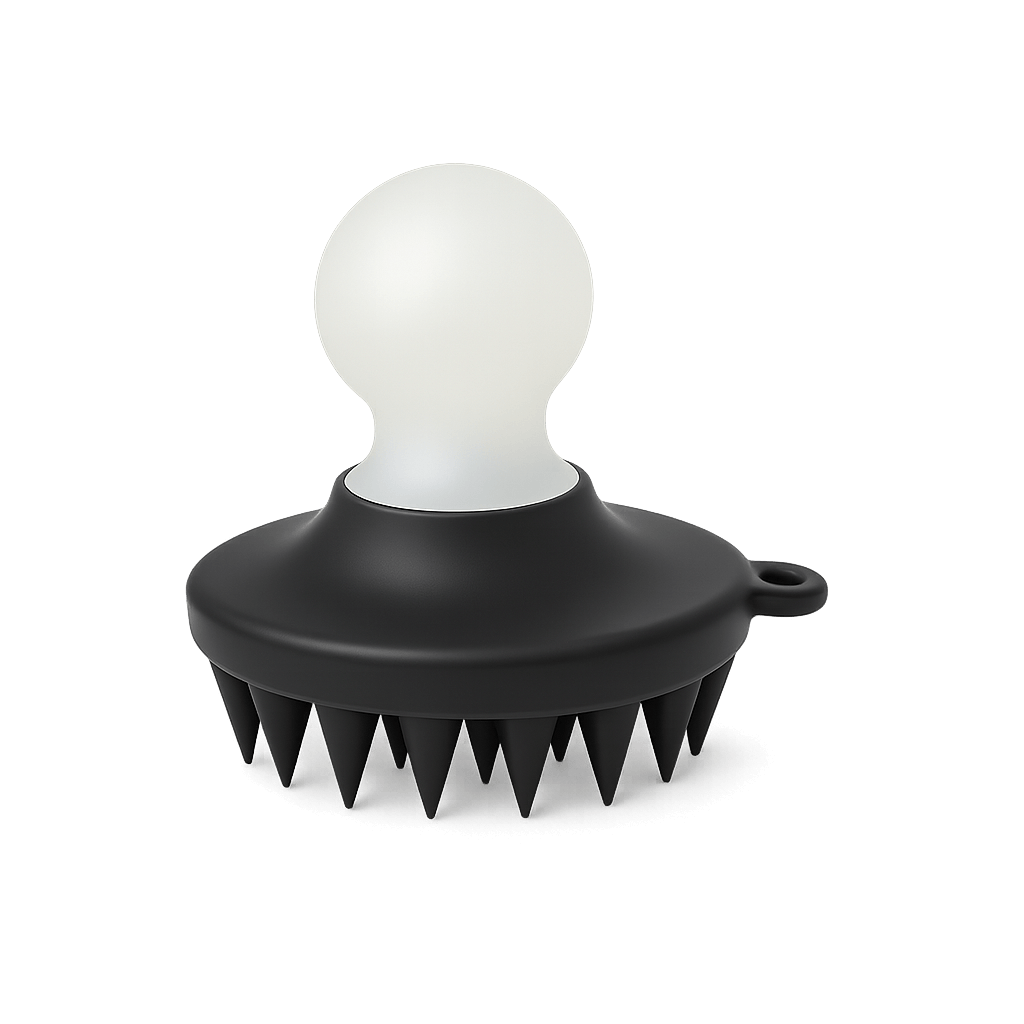
For gentle detangling, the KÖ beauté Hair Brush Detangler brush can be used in the smaller available size. It is a tool for a gentler routine—not a treatment for medically caused hair loss.
7. Do not try to care your way out of warning signs
Arrange a dermatological or medical evaluation promptly if round bald patches suddenly appear, the scalp is painful, severely itchy, burning, oozing, or scarred, the eyebrows or body hair are also affected, or hair density continues to visibly decrease. Heavy diffuse shedding that persists for several weeks should also be professionally assessed. Dermatologists can often distinguish hair breakage, increased shedding, and different forms of hair loss through a medical history, scalp examination, and trichoscopy.
Care: What cosmetic products can—and cannot—do
Gentle cleansing for a reliable baseline
A consistent routine makes changes easier to observe. The KÖ-HAIR Growth Circulation Shampoo can be used as a cosmetic cleansing step for the hair and scalp. Focus the shampoo on the scalp and let the lather run through the lengths when rinsing. It does not treat hormonal or inflammatory causes of hair loss.
Use leave-on care products selectively rather than indiscriminately
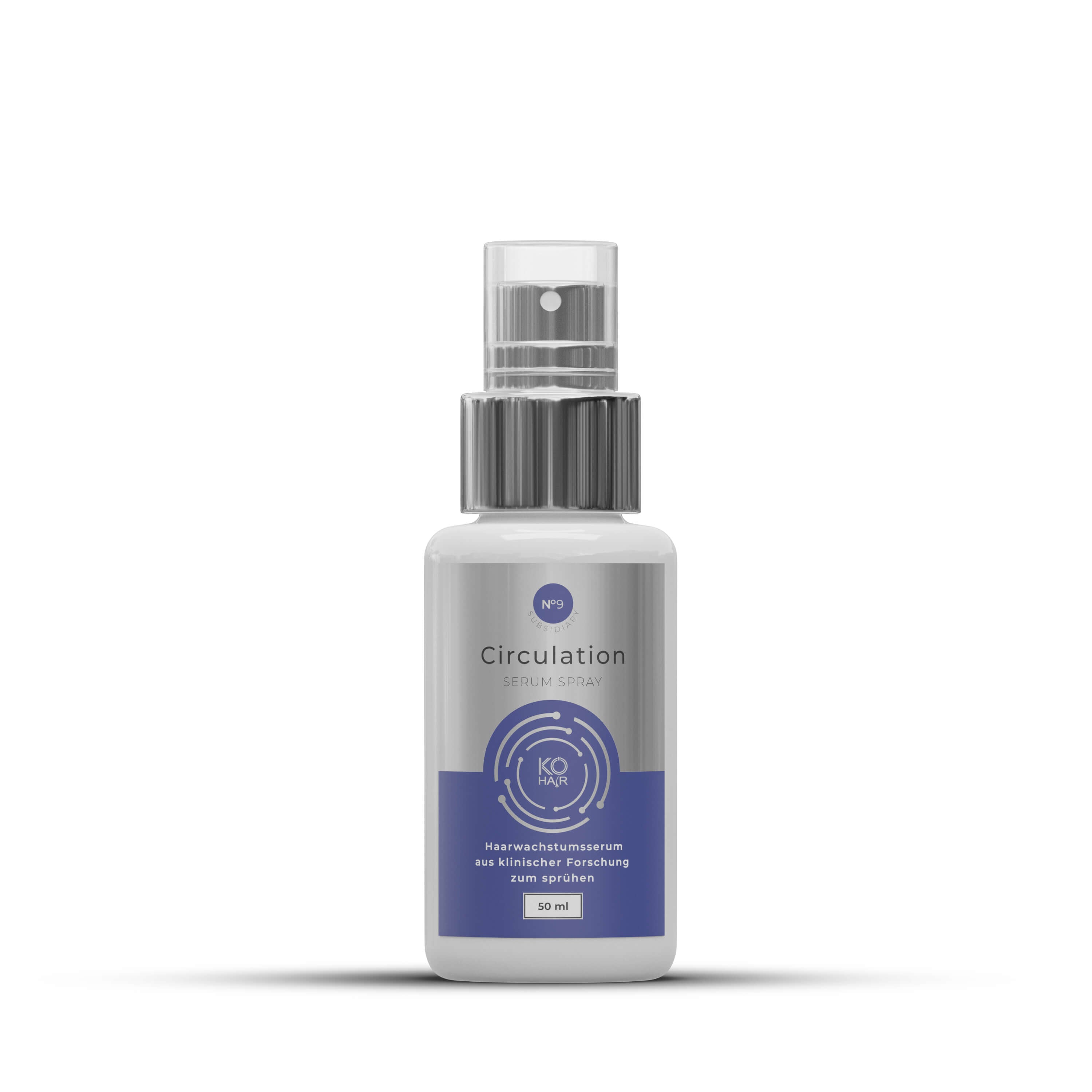
The KÖ-HAIR Circulation Serum Spray can be applied directly to the scalp as a separate cosmetic care step. Use it consistently according to the product instructions, and assess the results over a realistic period rather than daily. If symptoms or visible hair loss progress, seeking medical evaluation is more important than adding more products. You can find an overview of the associated care products in the KÖ-HAIR Redensyl Collection.
Nutrition and lifestyle: take a clear-eyed look at the basics
Protein and energy supply
Hair consists primarily of keratin. A consistently very low intake of energy or protein can affect the hair cycle, especially with rapid weight loss. Aim for regular, balanced meals with suitable protein sources such as legumes, dairy products, eggs, fish, meat, tofu, or nuts—according to your personal needs.
Do not blindly take high doses of iron, zinc, and vitamins
Deficiencies may play a role, but indiscriminate supplementation is not automatically helpful. If iron deficiency, thyroid problems, or other medical causes are suspected, laboratory results and symptoms should be evaluated by a doctor. High-dose supplements can cause unwanted effects and interactions.
Sleep, stress, and habits
Lack of sleep or ongoing stress do not prove a cause, but they can affect routines, nutrition, and well-being. More practical than a perfect “Hair Wellness” program are small, consistent steps: getting enough rest, eating regular meals, engaging in moderate exercise, and choosing a hairstyle that does not pull.
Common self-check mistakes
- Stopping brushing altogether: This allows hairs that have already come loose to accumulate, making them suddenly visible during the next wash. Gentle detangling is more sensible than avoiding brushing entirely.
- Testing different products every day: A constantly changing routine makes observations difficult to interpret and can further irritate the scalp.
- Interpreting the white bulb as a pulled-out root: The visible light-colored bulb is not the entire follicle.
- Looking only at the brush: What matters is the progression, hair density, scalp, and accompanying symptoms.
- Confusing cosmetics with treatment: Hair care can support cleansing, manageability, and a well-groomed appearance. It does not diagnose or cure a condition.
Conclusion: Distinguish first, then take appropriate action
Hair breakage usually appears as short, uneven, and frayed pieces. Increased shedding or actual hair loss, on the other hand, affects complete hairs and may also become noticeable through visible changes in density. With photos, a short observation period, and a gentle routine, you can gain clarity without getting lost in daily hair counts.
If hair quality improves with less pulling, heat, and friction, mechanical stress was probably a contributing factor. If hair loss, bald patches, or scalp symptoms persist, early professional assessment is the next right step. This is no reason to panic, but the most reliable shortcut to finding a suitable strategy.