Hard Water & Hair: Why Limescale Makes Fine Hair Look Thinner
The care routine is the same, the shampoo is still in the shower as always—and yet the hair suddenly feels different: duller, heavier, less flexible. The roots fall flat more quickly, the part looks more visible, and shorter, broken hairs appear in the brush. This difference is often especially noticeable after moving, traveling, or spending an extended period in a region with hard water.
But can hard water actually cause hair loss? The honest answer is: Direct loss at the hair root has not been clearly established scientifically. However, minerals in the water can build up on the hair shaft, make the hair surface feel rougher, and—depending on water hardness, hair condition, and care routine—contribute to hair breakage. This breakage can make fine or already thinning hair appear even thinner.
What does “hard water” actually mean?
Water is considered hard when it contains comparatively high levels of dissolved calcium and magnesium compounds. This is not initially a health concern. However, the mineral composition can become cosmetically relevant for the hair and scalp: During washing, residue can remain on the hair, scalp, faucets, and shower walls.
This does not suddenly create a visible layer of limescale on the hair. Rather, fine mineral deposits can combine with sebum, styling residue, and haircare products. The hair may then feel less clean, duller, or “coated” despite being washed. Fine hair loses its lightness and volume particularly quickly.
Can hard water cause hair loss?
Here, it is important to clearly distinguish between hair loss at the root and hair breakage through the lengths. Genetic, hormonal, or diffuse hair loss does not simply result from limescale in tap water. The studies currently available on the hair shaft are also small and have produced differing results.
Some laboratory studies found higher mineral deposits and a rougher-looking surface in hair treated with hard water. Other studies showed no significant change in elasticity or tensile strength. Another study found that strength decreased with very hard water. The scientifically sound conclusion is therefore: Hard water is not a universally proven cause of hair loss, but it can alter how the hair feels and contribute to increased breakage in sensitive or already damaged hair.
Anyone who already has fine hair, bleached lengths, a receding hairline, or a thinning part may notice this effect more strongly. Not necessarily because fewer hairs suddenly grow overnight—but because shine, cohesion, and fullness are lacking.
Six signs that your haircare routine is struggling with water hardness
- Faucets and shower glass quickly develop light limescale marks.
- The hair feels rough, waxy, or heavy immediately after washing.
- Shampoo lathers noticeably less than it does in another location.
- The roots fall flat while the lengths feel dry at the same time.
- Color and shine look dull more quickly.
- On vacation or after a salon visit, the hair suddenly feels softer and fuller.
A single sign proves nothing. If several occur together, it is worth checking the local water hardness with your water supplier or testing it with a test strip.
The right routine for hard water
1. Clean thoroughly—without overwhelming the scalp
When mineral and styling residue is present, reliable cleansing is more important than scrubbing as aggressively as possible. Apply the shampoo mainly to the roots, massage the scalp with your fingertips, and let the lather run through the lengths as you rinse. Very hot water can put additional strain on dry hair; lukewarm water is usually the better choice.
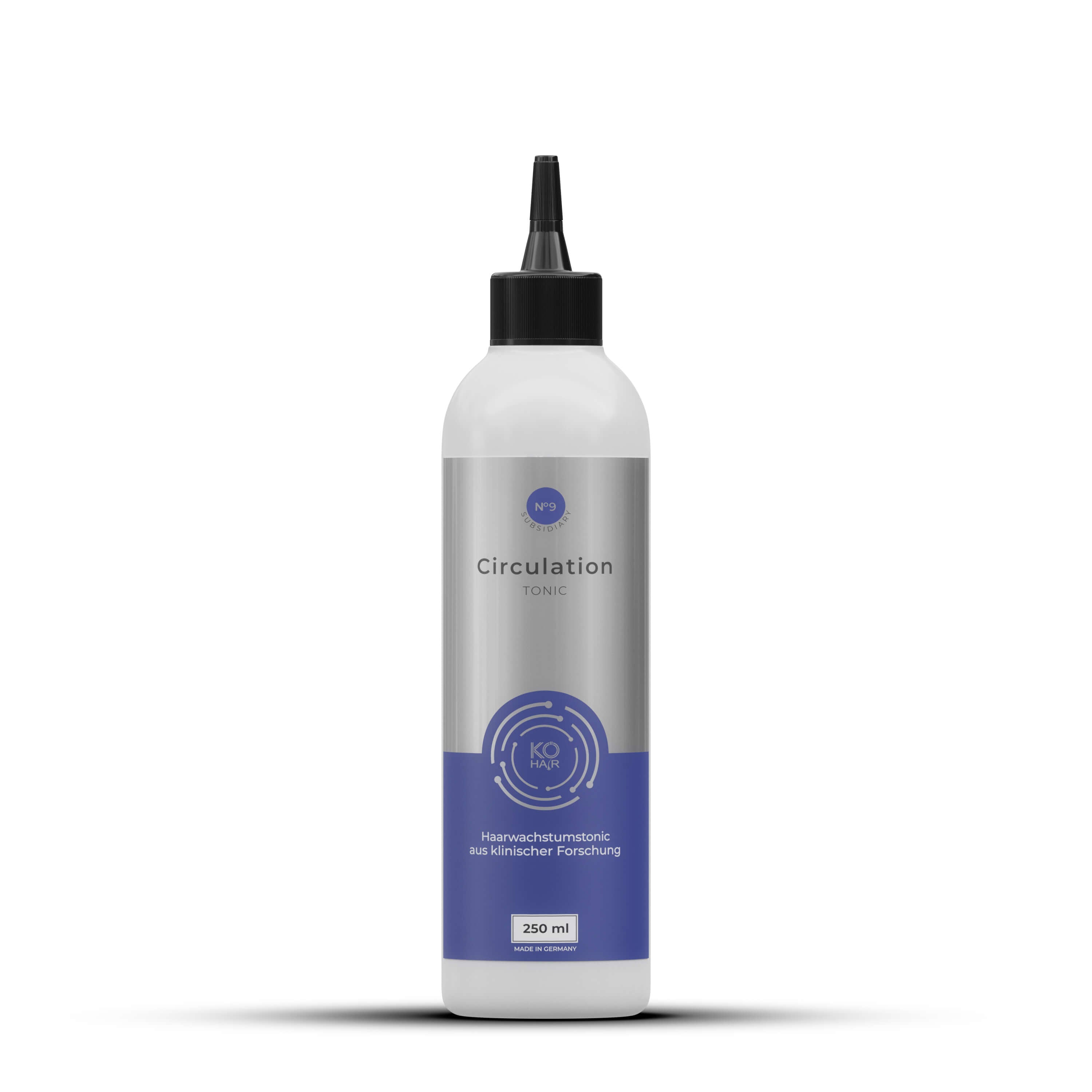
KÖ-HAIR Circulation Shampoo can be used as a regular part of a scalp-first routine: It cleanses the scalp and roots and prepares the foundation for subsequent care. Important: A daily hair shampoo is not automatically a specialized descaler. If you notice significant buildup, a clarifying or chelating shampoo specifically designed for this purpose may occasionally be useful—but not with every wash.
2. Less product, cleaner layers
If the hair already feels coated, too many oils, waxes, or rich leave-in products will intensify the effect. Instead, work in lightweight layers: cleanse the roots, apply conditioner only to the lengths, and then use a targeted scalp product. This helps fine hair remain flexible.
3. Scalp care on a clean foundation
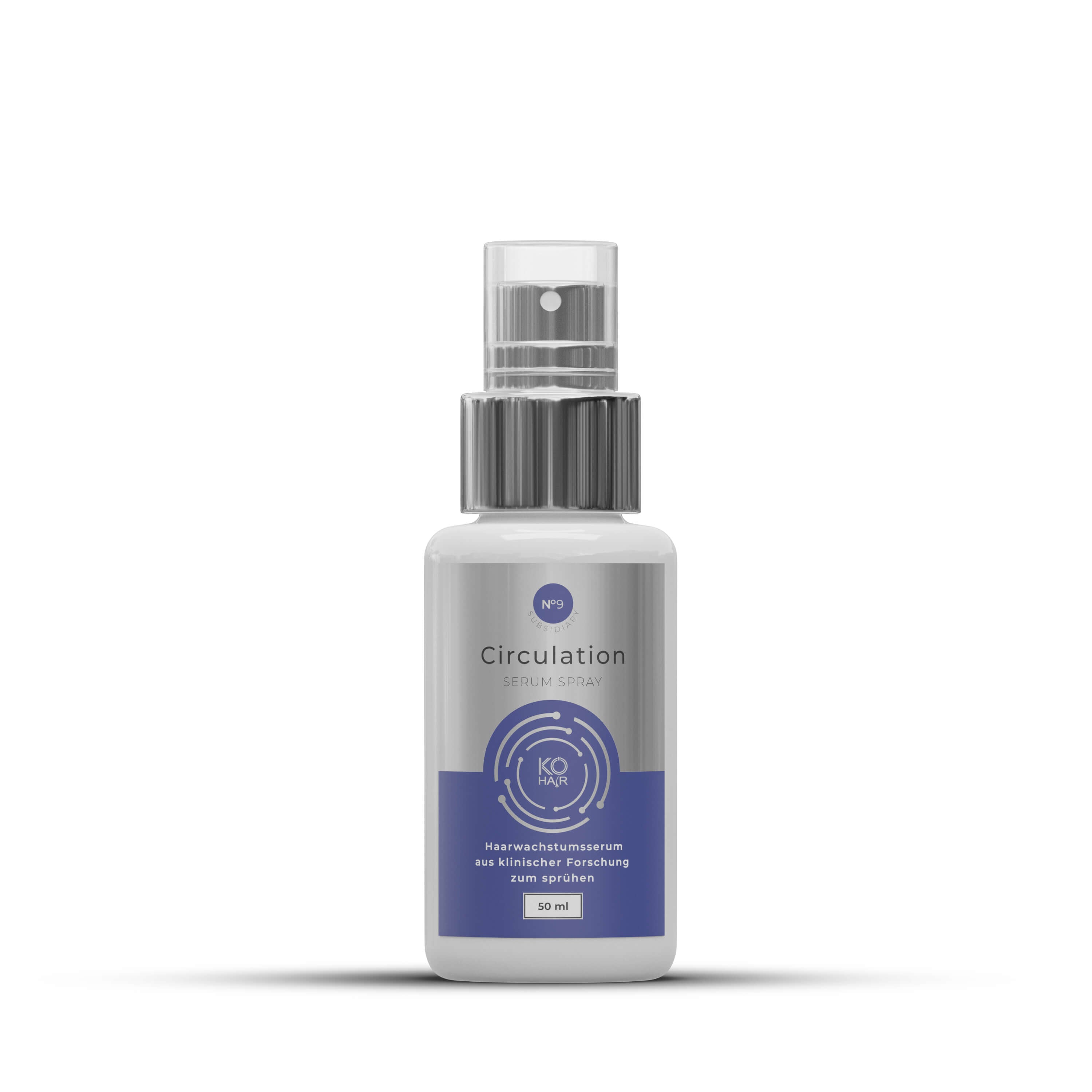
After cleansing, KÖ-HAIR Circulation Serum Spray can be specifically integrated into your routine at the roots. Part the hair section by section, apply the spray directly to the scalp, and massage it in gently. It does not replace a medical diagnosis or remove limescale from the water—but it turns scalp care into a conscious, consistent step rather than an occasional emergency solution.
4. Reduce everyday hair breakage
Hair with mineral buildup or that is dry may be more sensitive when detangling. After washing, gently squeeze the water out with a towel instead of rubbing the lengths. Detangle from the ends upward and use heat protection when blow-drying or styling. Tight hairstyles and high temperatures should not both be part of your daily routine.
5. Assess shower filters realistically
The term “shower filter” sounds like a simple solution, but not every system actually softens water. Depending on their design, many filters reduce chlorine, particles, or odors, for example, but do not remove calcium and magnesium to a significant extent. If you want to reduce water hardness yourself, specifically look for a suitable water-softening process—such as ion exchange—and transparent information from the manufacturer.
Inside-out care: What nutrition can do—and what it cannot
Water hardness affects the hair shaft from the outside. The supply to the hair root, on the other hand, depends partly on nutrition, metabolism, and individual health factors. A varied diet with sufficient protein, essential fatty acids, and micronutrients therefore remains the foundation.
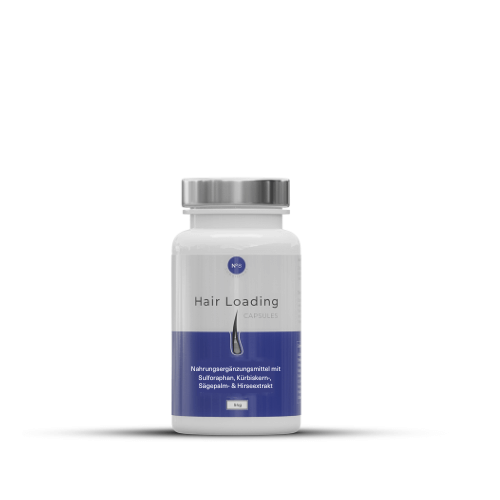
KÖ-HAIR Hair Loading Capsules can complement a structured beauty routine if you want to consciously support your intake from within. However, dietary supplements are not a substitute for a balanced diet and do not address either a medical cause of hair loss or hard water in the shower. If you suspect a deficiency, the cause should be medically assessed rather than combining more and more supplements without guidance.
Instantly more fullness: Hair fibers as a modern styling tool
An optimized routine takes time. For days when the roots fall flat or the part looks more visible because the hair is dull and lacks cohesion, a cosmetic instant solution is completely legitimate. KÖ-HAIR Fibers consist of fine cotton fibers that adhere to the natural hair and make sparse areas appear denser within seconds.
The result does not look like a rigid cover, but like visibly greater hair texture. This makes hair fibers suitable for women and men—at the part, crown, and receding hairlines. They are particularly practical for everyday use, before an event, for important photos, or on days when styling does not achieve the desired fullness despite proper care.
How to make hair fibers look especially natural
- Dry the hair completely and style it as usual.
- Choose a suitable shade and apply it sparingly at first.
- Apply the fibers to sparse areas in layers instead of using too much at once.
- Check the transitions at the part or hairline and, if necessary, refine them with an applicator or hairline optimizer.
Hair fibers do not treat the cause of hair loss. As a modern styling tool, however, they can instantly create greater visual density—and provide confidence at precisely the moment when a visible part or thinner-looking hair feels distressing.
A simple two-week test for your routine
Do not change everything at once. First, check your water hardness and document the condition of your roots, part, and ends in the same lighting. For two weeks, consistently wash with lukewarm water, use less styling product, and detangle especially gently. Use a clarifying product only if it suits your hair and scalp type.
Then compare: Does the hair feel lighter? Do the roots stay fresh longer? Are there fewer short broken hairs? These observations are often more informative than a single “before-and-after” wash day.
When to have hair loss medically assessed
Hard water is a plausible explanation, but it must not distract from other causes. Have sudden, severe, patchy, or hair loss lasting several weeks, as well as an inflamed scalp, pain, or clearly bald areas, examined by a dermatologist. Hormonal changes, medications, stress, illnesses, and nutrient deficiencies may also play a role.
Conclusion: Consider water quality, but do not jump to conclusions about hair loss
Hard water can leave residue on the hair shaft and make fine hair appear duller, heavier, or less full. Research provides indications of mineral deposits and, under certain conditions, reduced hair strength, but it does not prove that tap water generally causes direct hair loss.
The best strategy is therefore neither panic nor an overloaded ten-step routine: Check the water hardness, cleanse the scalp gently and thoroughly, reduce hair breakage, and build your routine consistently. For immediate visual fullness, KÖ-HAIR Fibers offer a discreet solution, while shampoo, serum, and balanced nutritional support structure the long-term routine. This turns a frustrating bad hair day into a problem that can be managed step by step.
Scientific context: Research on hard water and hair is limited and inconsistent. Studies on tensile strength, mineral deposits, and changes to the hair surface were considered: Srinivasan et al. (2013), Srinivasan et al. (2015), Alahmmed et al. (2017), and Luquman et al. (2018).