How to Apply Hair Fibers for Men Correctly: 7 Steps for a Natural Look
You’ve styled your hair, take a step back—and yet your eyes keep returning to the thinner crown? Hair fibers can make such areas look visibly more even within just a few minutes. What matters is not using the largest amount, but following the right order: dry hair, a suitable shade, and several very thin layers.
This guide presents a practical 7-step routine specifically for men with a thinning crown, a widening part, or early receding temples. Important: hair fibers are a cosmetic quick fix. They make existing hair look fuller, but they do not treat the cause of hair loss or make new hair grow.
The short answer: How to make hair fibers look natural
Hair fibers visually attach to existing hair and reduce the contrast with visible scalp. The result is usually most convincing when enough of your own hair is still present, the scalp is completely dry, and you work from little to more. On smooth, completely bald areas, however, the fibers lack the necessary grip.
How to apply hair fibers correctly: 7 steps
1. Check the target area in daylight
Stand by a window or use neutral light and examine your hairline, part, and crown from several angles. Decide where you actually need more visual density. Later, apply the fibers only there—not indiscriminately over your entire head. This saves product and prevents a powdery overall appearance.
2. Match the shade to your roots
Choose a shade that matches the hair directly at the roots, not the lighter ends bleached by the sun. If your color falls between two shades, the slightly darker option often looks more harmonious on the crown; on a very light hairline, the lighter shade may look softer. Test a small amount first and check the result in daylight. KÖ-HAIR FIBERS with cotton fibers are currently available in several shades.
3. Dry your hair completely and pre-style it
Wash your hair as needed and dry your scalp and roots completely. Moisture, oil, or heavy styling creams can cause the fibers to clump. First, create the basic shape: blow-dry your hair with your fingers or a wide-tooth comb in the desired direction. Dermatological hair-care recommendations also advise gentle drying and minimal pulling, as wet hair can break more easily.
4. Apply in extremely thin layers
Hold the fiber container a few centimeters above the thinning area and start with a small amount. Work from the denser edge toward the thinner center. Wait a moment after each layer before adding more. Two or three fine layers almost always look more natural than one thick layer. The scalp may still show through minimally—real hair density does not look like a completely solid surface either.
5. Shape the hairline and crown precisely
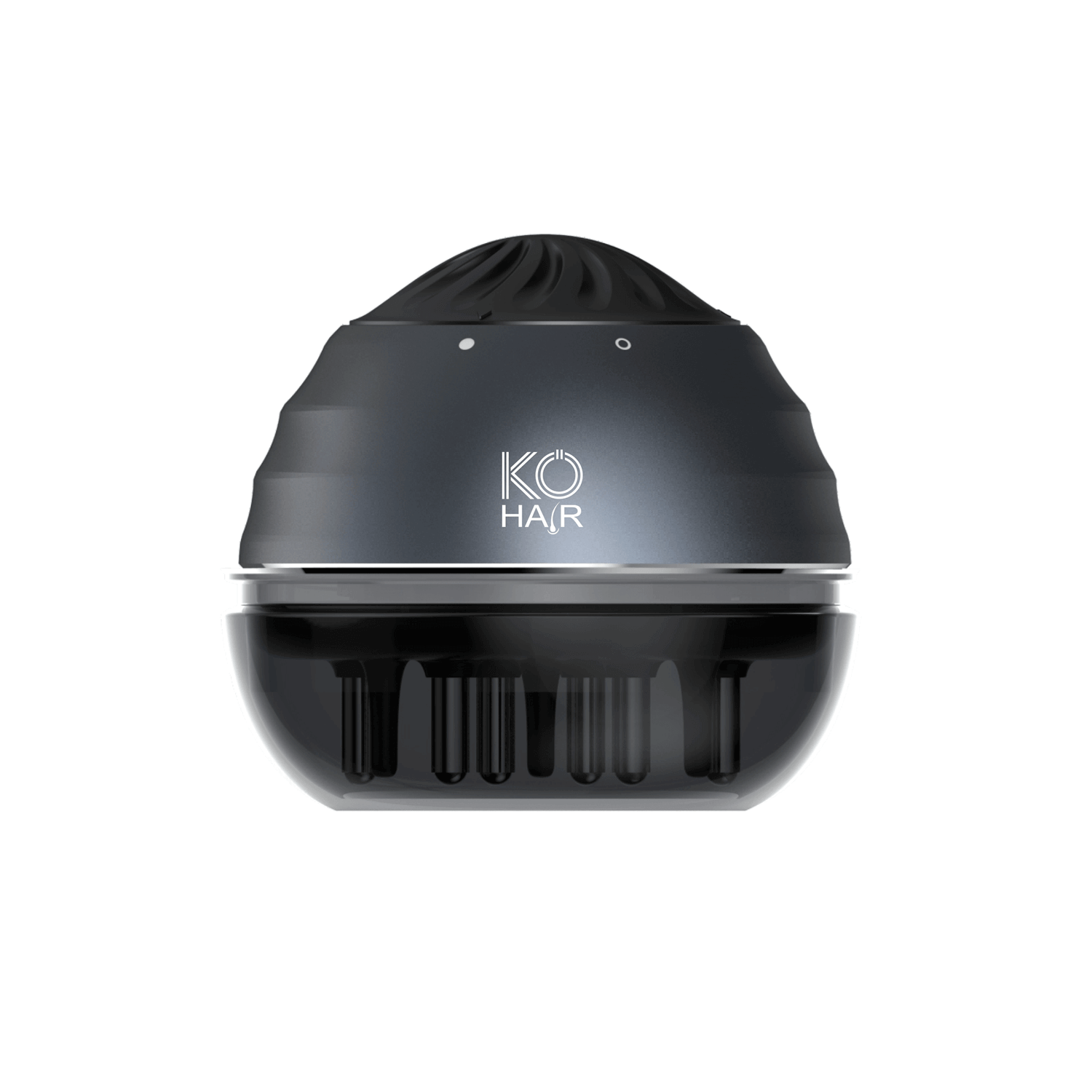
At the crown, you can distribute the fibers in a circular motion along the natural direction of growth. At the temples or hairline, precision matters more than quantity. A KÖ-HAIR Applicator helps you apply the fibers more precisely. Keep the very front edge slightly irregular on purpose: A hard, geometric line gives away the styling more quickly than a soft transition.
6. Blend with your fingertips
Very lightly tap the surrounding hair or shape individual sections with dry fingertips. Do not rub or brush through vigorously—otherwise you will remove the freshly applied fibers. With a textured crop or soft taper, a matte, flexible finish looks particularly cohesive; current men’s hair trends in 2026 strongly favor natural texture and less rigid contours.
7. Check the result from three angles
Check the front, side, and crown using a hand mirror or your smartphone’s rear camera. Remove excess fibers from your forehead and ears with a dry cloth. If you use a fixing spray, apply only a light mist from a sufficient distance and let it dry. Do not comb afterward. For sports, rain, or heavy sweating, the result may change—plan a quick check.
The five most common mistakes
- Applying too much at once: makes the result look dull and uneven.
- Applying to damp hair: encourages spots and clumps.
- Choosing the wrong shade: increases rather than reduces the contrast with the scalp.
- Creating a razor-sharp hairline: quickly looks painted on rather than natural.
- Brushing vigorously after application: removes fibers and can unnecessarily strain fine hair.
Remove it in the evening and keep your scalp calm
Wash out the hair fibers in the evening with a mild shampoo, especially if you also used fixing spray. Rinse thoroughly and pat your hair dry. A clean, balanced scalp is the better foundation for your next styling session. If you experience itching, burning, or noticeable redness, stop using the product and have the cause evaluated.
Care, nutrition, and lifestyle: What really matters
Visual thickening does not replace identifying the underlying cause. A varied diet with sufficient protein and essential micronutrients supports normal bodily function; however, high-dose supplements are not automatically useful without a proven deficiency. Sleep, stress management, and gentle hair care can be part of a good routine, but they are no guarantee against hereditary or medically related hair loss.
If you are unsure whether you are seeing hair breakage or actual hair loss, start with our 7-step self-check for hair breakage and hair loss. Men who want to monitor changes systematically can also use the 30-day self-check for men.
When dermatological or medical evaluation is advisable
Make an appointment if hair loss begins suddenly, round or inflamed patches appear, your scalp hurts, flakes heavily, or shows scarring. Rapidly progressing hair loss, changes to the eyebrows or nails, and other physical symptoms should also be professionally assessed. The sooner the cause is identified, the more targeted medical advice can be.
Conclusion: A natural result instead of maximum coverage
Good hair-fiber styling is not noticeable because of perfection, but because of balance. Start with dry hair, apply sparingly, work with the natural direction of growth, and check the result in daylight. This keeps the look flexible, believable, and suitable for everyday life—while medical questions remain where they belong: in expert hands.