Spotting Hair Loss in Men Early: The 30-Day Self-Check in 7 Steps
Sometimes it is simply different lighting. Sometimes the hairstyle lies flatter than usual. And sometimes, when looking in the mirror, you notice: The temples look more exposed, and more scalp seems visible at the crown. Especially then, a frantic product switch will not help; what is needed is a calm, comparable baseline.
This 30-day self-check shows men how to document changes in the hairline, crown, and scalp sensibly, simplify their hair-care routine, and recognize when professional advice is important. It does not replace a diagnosis. But it turns a vague feeling into a clear observation that can also make a dermatological consultation much more specific.
Hair loss or just more hair in the drain?
Hair goes through natural growth and resting phases. Therefore, a single day with more hair on the towel says little. The American Academy of Dermatology also distinguishes between temporarily increased shedding and progressive hair loss. What matters is the progression, pattern, accompanying symptoms, and possible triggers.
In men with hereditary hair loss, thinning often first appears at the temples, along the front hairline, or on the crown. It usually progresses slowly. Sudden bald patches, severe redness, pain, or marked flaking, however, do not automatically fit this typical pattern and should be professionally evaluated.
The 30-day self-check in 7 steps
1. Day 1: Create an honest baseline series
Photograph your hair dry and without styling products from five fixed angles: front, both temples, top of the head, and back of the head or crown. Always use the same room, lighting, distance, and, if possible, hairstyle. Front-facing daylight is better than harsh overhead lighting.
Important: A photo is not a diagnosis. The series is only intended to compare later images under conditions that are as similar as possible.
2. Mark the areas you want to monitor
Note whether your concern mainly involves the hairline, receding temples, the parting, the crown, or overall density. This way, after 30 days you will not compare every detail at random. A slowly receding temple line is different from suddenly appearing round patches or diffuse thinning after a fever, surgery, significant weight loss, or prolonged stress.
For an expert overview of common men’s hair concerns, the KÖsmetik Collection for Hair Loss in Men offers relevant basics and available hair-care products.
3. Monitor the progression—without counting hairs every day
Briefly note on two set days each week: Does the density seem unchanged, thinner, or fuller? Are there noticeably many hairs on your pillow, clothing, or during washing? Precisely counting hairs every day often only increases uncertainty and is difficult to compare because of hair length, intervals between washes, and styling.
Instead, keep track of possible triggers: illness or fever in recent months, new medications, a strict diet, unusual stress, lack of sleep, or a family predisposition. Never stop taking medication on your own; discuss your concerns with a doctor.
4. Check your scalp once a week
Part your hair in three places and look for redness, flaking, pustules, crusting, burning, pain, or severe itching. An unremarkable scalp does not rule out hair loss, but signs of inflammation affect how urgently it should be evaluated.
Wash your hair as often as suits its oiliness, exercise routine, and comfort. Gentle washing does not cause hereditary hair loss—it merely makes hairs that have already detached visible.
5. Simplify your hair-care routine for four weeks
Do not change your shampoo, styling products, supplement, and scalp serum all at the same time. Otherwise, you cannot determine either your tolerance or their benefits. For a consistent routine, the available KÖ-HAIR Growth Circulation Shampoo can be used as a conditioning cleansing step. Massage it in gently with your fingertips; vigorous scratching and very hot water are unnecessary.
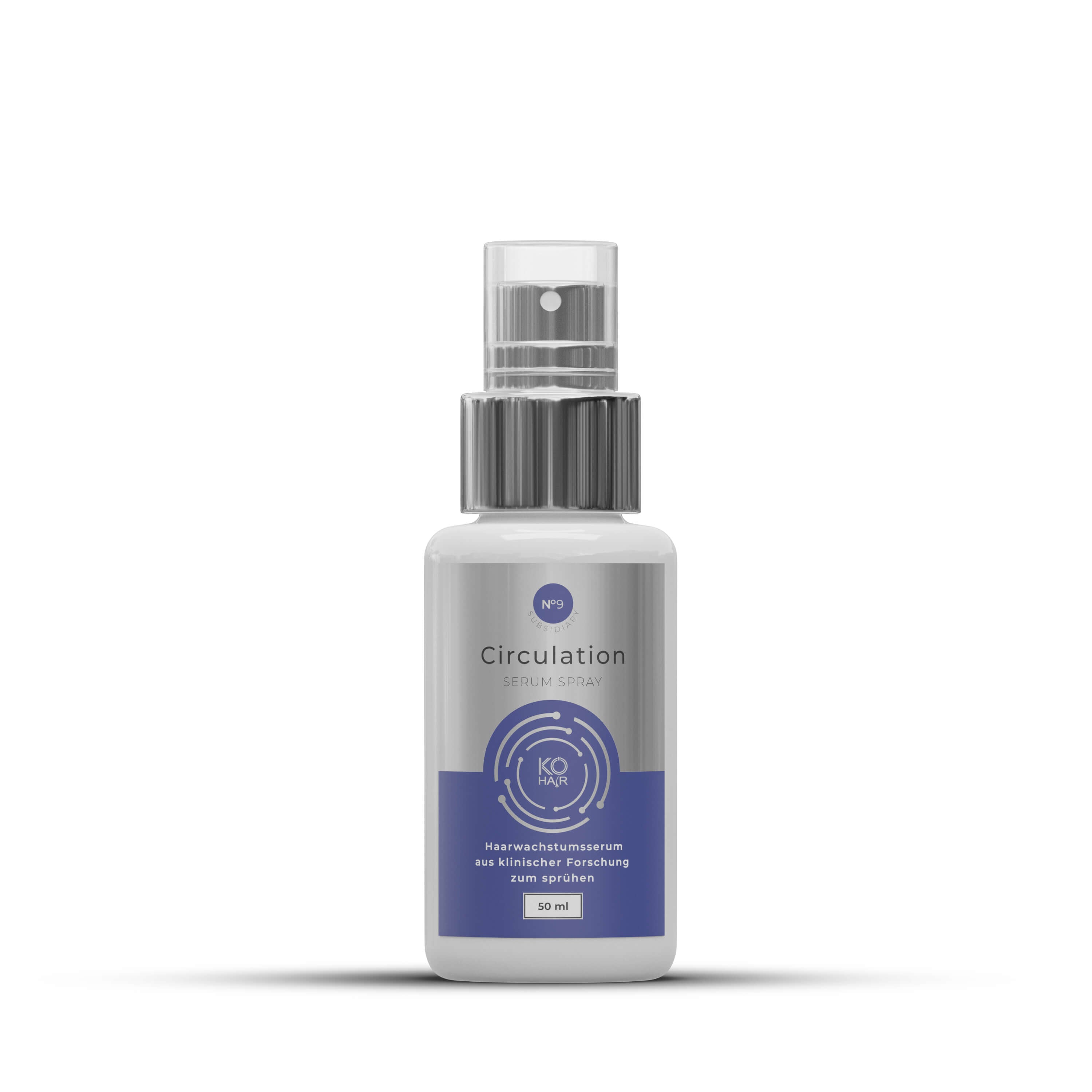
As a leave-in treatment, KÖ-HAIR Circulation Serum Spray can be applied to the scalp regularly. Cosmetic care can support the scalp and how the hair feels. However, it does not replace a medical diagnosis or treatment and does not “cure” hereditary hair loss.
6. Protect existing hair when styling
Dry your hair by pressing rather than rubbing, comb without pulling, and blow-dry from a distance at a medium temperature. Very tight hairstyles, frequent bleaching, and aggressive heat can contribute to hair breakage or traction-related hair loss. A matte, lightweight styler often looks more natural on thinning hair than heavy, shiny gel, which clumps strands together and makes the scalp more visible.
If you want the appearance of greater density, use appropriate styling aids only after completing your hair-care routine and once your hair is completely dry. An immediate cosmetic effect is different from new hair growth—keeping this distinction clear protects against unrealistic expectations.
7. Day 30: Compare, decide, and continue documenting
Repeat the five photos under the same conditions and look only at comparable images. Thirty days is too short to assess natural hair growth reliably. However, this period is long enough to establish a good baseline, identify noticeable changes or scalp problems, and assess how well you tolerate a consistent routine.
- Unchanged and symptom-free: continue your routine and compare again only after another two to three months.
- Gradually thinning at the temples or crown: seek dermatological advice early, especially if there is a family history.
- Sudden, patchy, or inflammatory: seek medical evaluation promptly instead of starting further self-treatment attempts.
Diet and lifestyle: What can realistically help
Hair consists primarily of keratin, a protein. A balanced diet with sufficient protein, as well as sources of iron, zinc, vitamin D, and other micronutrients, provides important foundations. However, more is not automatically better: high-dose supplements may be unnecessary, cause interactions, or even be harmful if used incorrectly.
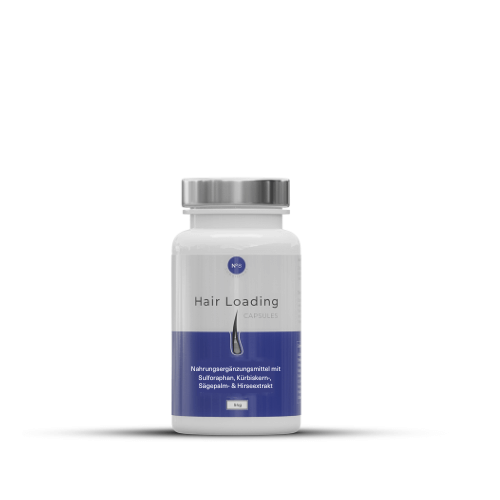
The KÖ-HAIR Hair Loading Capsules are an available dietary supplement containing plant extracts, vitamins, and minerals. They are not a substitute for a balanced diet and are not a treatment for hair loss. The recommended daily intake must not be exceeded; if you have medical conditions, take medication, or are uncertain, seeking medical advice is advisable. A diagnosed deficiency should be treated specifically under professional guidance.
Regular sleep, sufficient recovery, exercise, and a practical approach to managing stress are equally important. They do not guarantee thicker hair, but they can support overall well-being and consistent self-care.
The most common mistakes when checking yourself
- Photos in different lighting: Wet hair and harsh light can make the scalp appear significantly more visible.
- Check daily: Natural fluctuations can be mistakenly interpreted as progress or deterioration.
- Starting several products at once: It remains unclear what caused an intolerance and what provided a benefit.
- Using shed hairs as the only metric: The interval between washes and hair length can distort the impression.
- Confusing cosmetics with treatment: Care can help, but it cannot diagnose causes.
- Ignoring warning signs: Prompt evaluation is more important for sudden or inflammatory changes than trying another beauty hack.
When should you see a dermatologist?
Arrange a dermatological evaluation if hair loss begins suddenly, increases rapidly, circular or sharply defined patches appear, the eyebrows or beard are affected, or the scalp is painful, oozing, severely itchy, crusted, or appears scarred. Significant fatigue, weight changes, or other physical symptoms should also be included in the medical history.
Early assessment is also advisable if hair loss is causing you psychological distress or if you are considering medication or surgical options. Dermatologists can assess patterns, the scalp, medications, pre-existing conditions, and, if necessary, laboratory results together.
Conclusion: Clarity beats knee-jerk action
The best first step when your hair is thinning is not the next quick promise, but a reliable baseline. With standardized photos, brief weekly notes, a gentle consistent routine, and clear warning signs, uncertainty becomes a manageable plan.
Stay realistic: Care supports scalp and hair quality, styling can create the appearance of greater density, and medical causes require medical expertise. This clear distinction is precisely what makes your 30-day self-check valuable.
Frequently asked questions about the 30-day hair check
Can new hair growth already be detected after 30 days?
As a rule, this period is too short for a reliable assessment of hair growth. The check mainly creates comparable baseline data and makes scalp problems or noticeable changes visible.
Should I count my hair every day?
No. Daily counts are heavily influenced by washing and styling routines. Comparable photos and brief weekly notes are usually more helpful.
Is a receding hairline always hereditary?
No. The pattern may be typical, but only a professional examination can rule out other causes and assess suitable options.