More Hair When Washing? What Normal Hair Shedding Is – and When It's Worth Taking a Closer Look
Many people first notice hair loss not in the mirror but in the shower or in the hairbrush. Individual hairs in the drain are not automatically a cause for concern. Hair goes through a natural growth cycle, and a certain daily hair loss is physiologically normal. What matters, however, is whether the overall picture changes: if the hair becomes finer overall, volume visibly decreases, or the scalp appears more clearly, a detailed examination is worthwhile.
Why more hairs are often noticed when washing
When washing hair, hairs that are already in the resting phase of the hair cycle often come loose. These would have fallen out during the day anyway but become visibly collected in the shower. This often creates the impression that hair loss has suddenly increased significantly.
From a biological perspective, this is not unusual. Hair growth occurs in different phases:
- Anagen phase: active growth phase
- Catagen phase: transition phase
- Telogen phase: resting phase followed by shedding
When hairs are in the telogen phase, they eventually detach mechanically – for example, when washing, combing, or drying.

Further information: Why shampoo often isn’t enough for hair loss – a scientific assessment →
When hair loss can still be within the normal range
Not every phase with increased hair loss automatically requires treatment. Temporary changes can occur, among other things, with:
- seasonal fluctuations
- stress phases
- hormonal changes
- changed routines
- Nutrient deficiency or stressful situations
Therefore, not only the number of hairs during washing is important, but the development over several weeks.
A closer look is advisable if:
- the hair overall looks thinner
- the part appears wider
- the hairline changes
- the scalp becomes more visible
- hair loss remains noticeable over a longer period

Why the overall picture is more important than individual hairs
Many affected individuals focus on the hair in the drain. From a professional perspective, however, what happens on the scalp and in the hair root area is more important. The visible hair is biologically inactive. The processes that influence hair quality and growth density take place in the hair follicle.
These include, among others:
- The activity of the hair root cells
- The supply to the follicle
- Local signaling processes
- The function of the scalp as the biological environment of hair growth
Therefore, the question is not only how many hairs fall out during washing but also whether the conditions for healthy regrowth are still present.
Why superficial care alone is often not enough
Shampoos primarily serve a cleansing function. They can care for the scalp and remove residues but are functionally limited due to their short contact time. Therefore, if hair density, hair quality, or early thinning is the focus, it is often worthwhile to take a closer look at targeted scalp care.
Topical products that remain on the scalp can be integrated into a routine that is more focused on the target structure than rinse-out products.

What a sensible assessment can look like
If you regularly notice more hair loss when washing your hair, you should not react hastily but also not ignore it permanently if the overall picture changes. A systematic approach is advisable:
- Observation over several weeks
- Assessment of volume, texture, and parting
- Consideration of stress, hormonal changes, and routine factors
- Targeted focus on the scalp instead of just the visible hair
Further information and targeted support
If you want to better understand which processes at the scalp and hair root influence hair density and hair quality, you can find further information about these connections in our shop. There you will also learn how a sensible scalp routine can be structured and what role targeted active ingredient care plays compared to cleansing products.
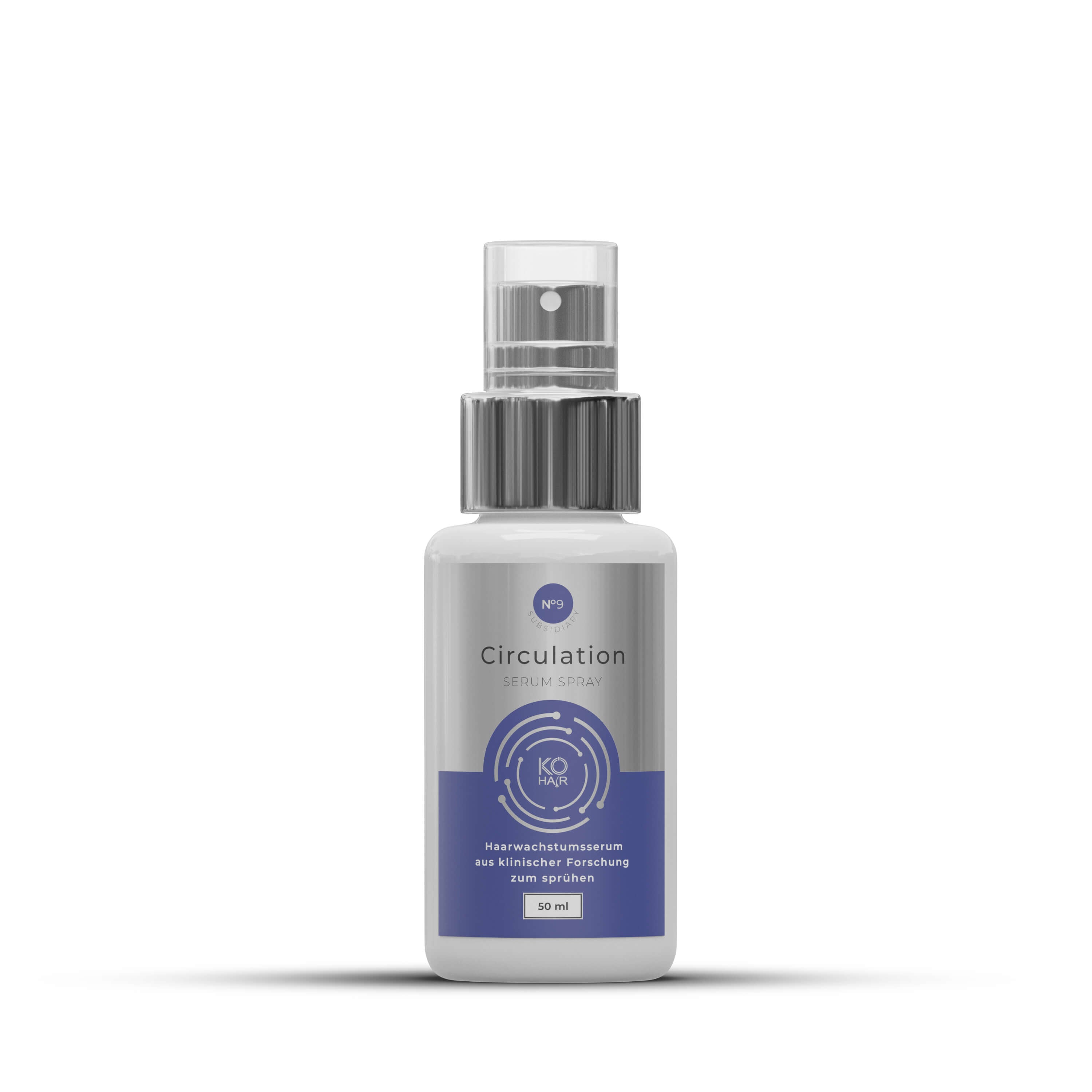
For targeted application on the scalp, our Circulation Spray with 3% Redensyl might also be interesting if you want to add an active ingredient-based step to your routine.
Conclusion
More hair loss during washing is not automatically a warning sign. What matters is whether the hair loss is temporary or if hair volume, texture, and the overall appearance of the scalp change. Those who look beyond individual hairs in the drain and consider the overall picture can make better decisions about when observation is enough and when targeted scalp care becomes relevant.