What helps against hair loss? Causes & best remedies
Hair loss affects both women and men—and the uncertainty is great because there are countless supposed miracle cures. This guide provides a well-founded overview of the causes behind hair loss, which nutrients and active ingredients really matter, what helps in everyday life, and when you should seek medical advice.
In brief: Combating hair loss requires a combination of addressing the underlying cause (e.g., nutrient deficiency, stress, or hormonal factors), ensuring an adequate supply of hair-relevant nutrients such as iron, zinc, selenium, and biotin, using targeted active ingredients for the scalp, and being patient—visible results usually take several months. If hair loss occurs suddenly or is severe, the cause should be medically evaluated.

The most common causes of hair loss
Before considering what helps, it is worth looking at why hair loss occurs. The most common causes include hereditary and hormonal factors, nutrient deficiencies, stress, hormonal changes, and seasonal influences. For example, chronic stress through the hormone cortisol can slow hair growth, while many people notice seasonal hair loss in spring. Gut health and hormonal balance (testosterone) also play a role.
Which vitamins and minerals are important for hair loss
Nutrient deficiency is one of the most common and, at the same time, most treatable causes. The following are particularly relevant for hair:
- Iron – important for supplying oxygen to the hair roots.
- Zinc and selenium – two trace elements that influence hair growth.
- Selenium and copper – involved in hair structure and pigmentation.
- Magnesium – the “anti-stress mineral” for the scalp.
- Amino acids – the building blocks of the hair protein keratin.
A deficiency can be identified through a blood test and corrected in a targeted manner—this is often the most effective first step.
Active ingredients for the scalp
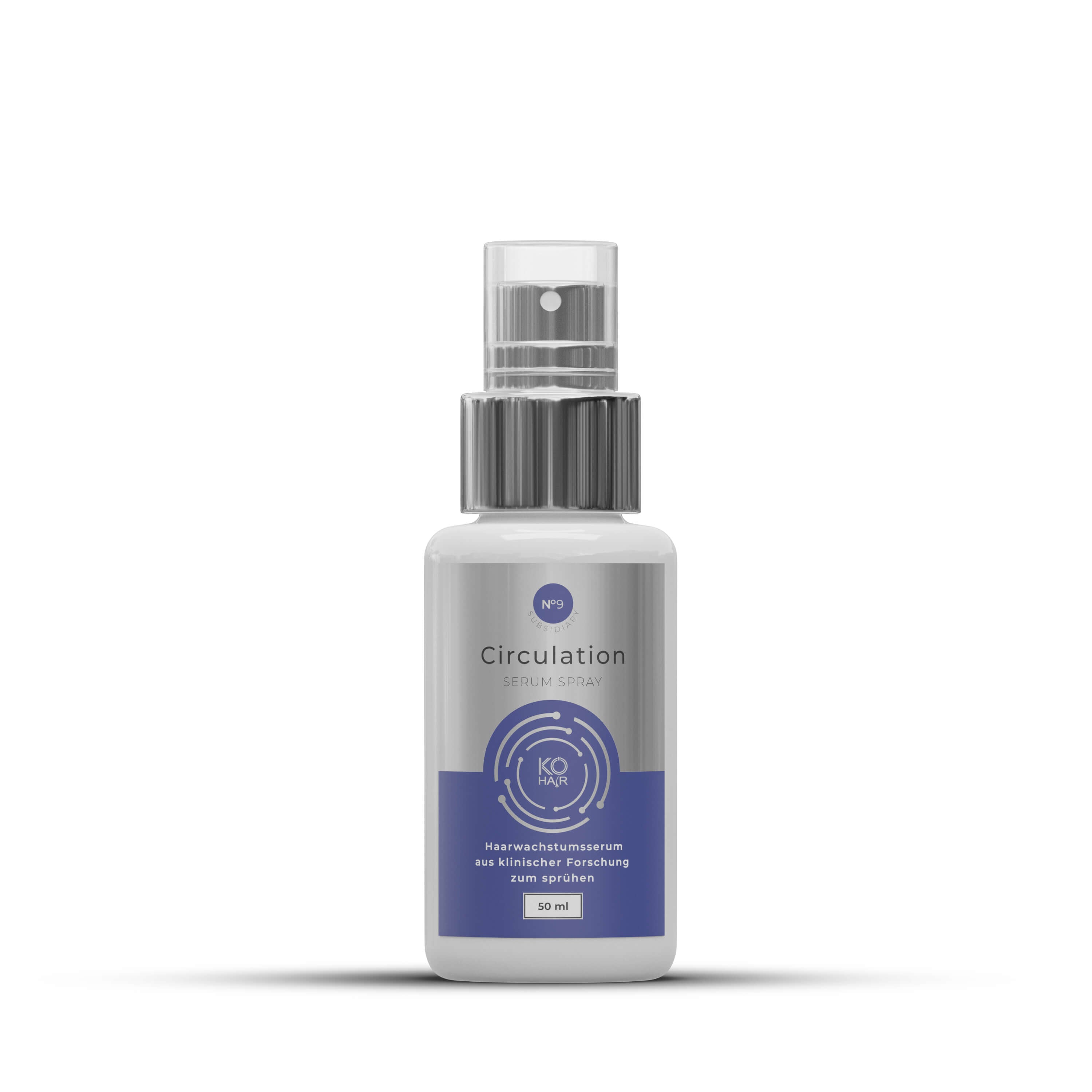
In addition to supplying nutrients from within, targeted active ingredients can support the scalp. These include Redensyl, a modern ingredient for hair care; the new active ingredient clascoterone; plant-based helpers such as saw palmetto extract and horsetail; as well as the much-discussed caffeine. Targeted scalp care can be achieved, for example, with the KÖ-HAIR Circulation Serum.
What you can do in everyday life
Lifestyle also matters: a balanced, protein-rich diet, stress management, gentle hair care, and strengthening the hair roots. If you prefer gentle and natural approaches, our overview provides an honest assessment of which home remedies really help. Mechanical stimulation can be provided with a derma roller.
Immediate help for your appearance
Active ingredients and nutrients take time to work. For an instantly fuller appearance, use hair fibers: fine fibers that visibly fill in sparse areas within seconds. This helps bridge the weeks until long-term measures take effect.
When you should see a doctor
A certain amount of daily hair loss is normal. You should have hair loss medically evaluated if it occurs suddenly, happens in clumps, is accompanied by bald patches, or occurs alongside other symptoms. A medical diagnosis clarifies the cause and forms the basis for any effective treatment. This guide is not a substitute for medical advice.
Frequently asked questions about hair loss
Which vitamins are lacking when you have hair loss?
Iron, zinc, selenium, biotin (vitamin B7), and vitamin D are often involved. A blood test shows whether a deficiency is present—targeted correction is then the most effective step.
Which deficiency causes hair loss?
Iron deficiency is the most common, followed by zinc, vitamin D, and biotin deficiencies. Protein deficiency can also weaken the hair.
Which doctor should you see for hair loss?
The first point of contact is a dermatologist, as they specialize in hair and the scalp. If hormonal causes are suspected, an endocrinologist may also be consulted.
How much hair loss is normal?
Losing around 70 to 100 hairs per day is considered normal. Significantly more hair loss over an extended period should be monitored and, if necessary, medically evaluated.
What helps with hair loss in women?
For women, the focus is on correcting nutrient deficiencies and hormonal triggers, supplemented by scalp-care active ingredients and—for immediate help—hair fibers along the parting.
Conclusion
What helps with hair loss is rarely a single miracle cure, but rather a combination of identifying the cause, ensuring a good supply of nutrients, providing targeted scalp care, and being patient. Cosmetic immediate solutions help bridge the gap until long-term measures become visible.
Discover KÖ-HAIR’s active-ingredient hair care—from Redensyl to Circulation Serum.
Explore active-ingredient hair care →