Dry skin after a flight: 7 steps for the journey home
Does your skin feel tight after the return flight, look dull, or suddenly feel rough? Airplane cabins and changing climate zones can put additional strain on dry skin. The good news: You do not need a complicated in-flight routine to keep your skin comfortable after traveling. Seven calm, coordinated steps are usually enough.
Dry Skin After a Flight: The Essentials at a Glance
The air in the cabin is dry. As a result, your skin may feel dry more quickly during a flight. Air conditioning, frequent handwashing, lack of sleep, and switching between a warm vacation destination, air-conditioned indoor spaces, and the weather at home can add to this. This is no reason to use harsh exfoliants or completely change your skincare routine. Dermatological recommendations instead focus on familiar products, gentle cleansing, and consistent moisturization.
The 7-Step Routine for Comfortable Skin After Returning Home
1. Before Takeoff: Simplify Your Routine Intentionally
Pack only products your skin already knows. New masks, heavily fragranced hotel cosmetics, or several active ingredients used at the same time increase the risk of irritation. A small travel routine consisting of gentle cleansing, a hydrating serum, moisturizer, and sunscreen is clear and practical for everyday use.
2. Clean Your Hands Before Touching Your Face
Many surfaces on an airplane are touched by numerous people. Therefore, clean your hands before applying skincare or touching your face. This will not prevent every skin reaction, but it does reduce unnecessary contact with dirt and products. Try to avoid rubbing or repeatedly touching your face whenever possible.
3. Apply Hydration to Slightly Damp Skin
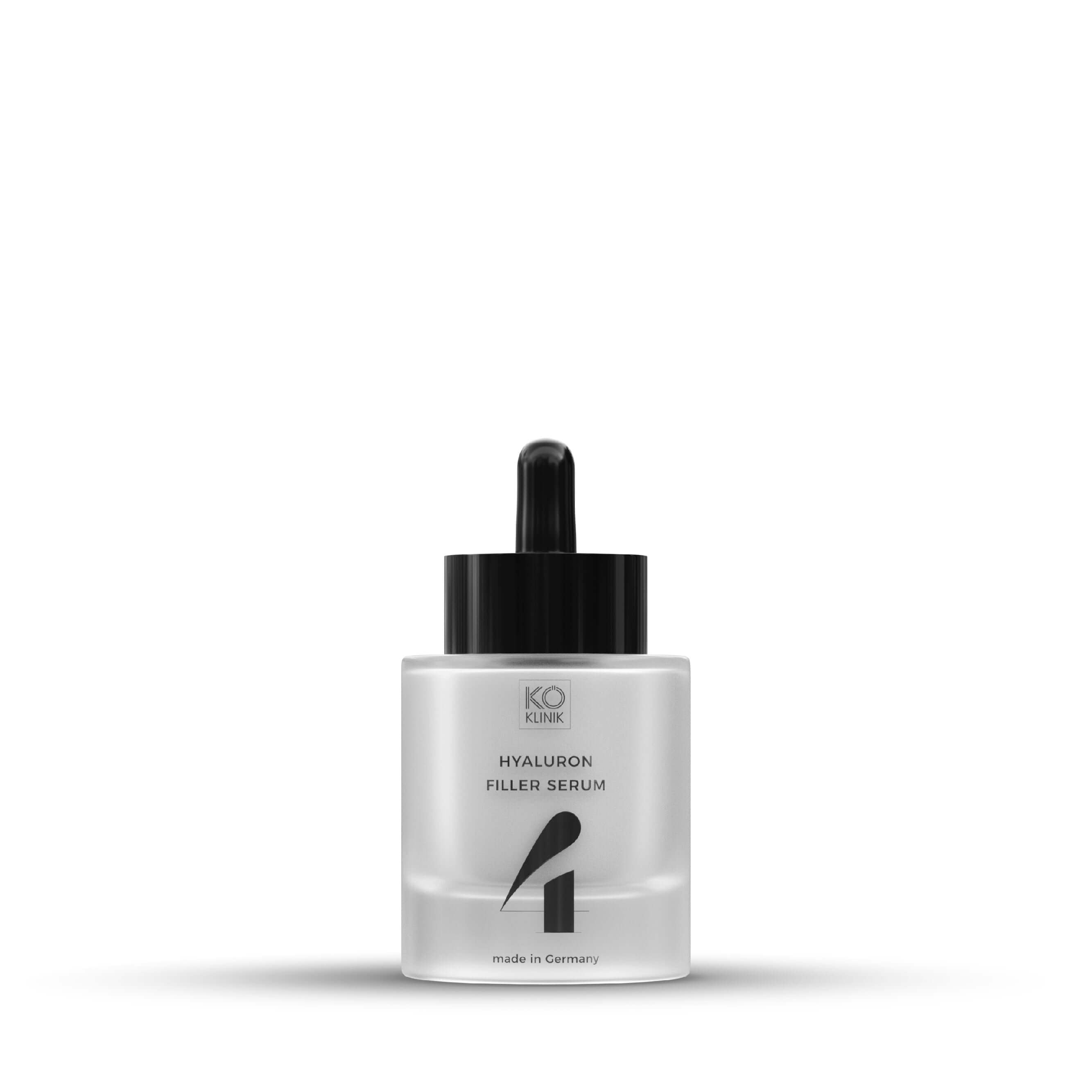
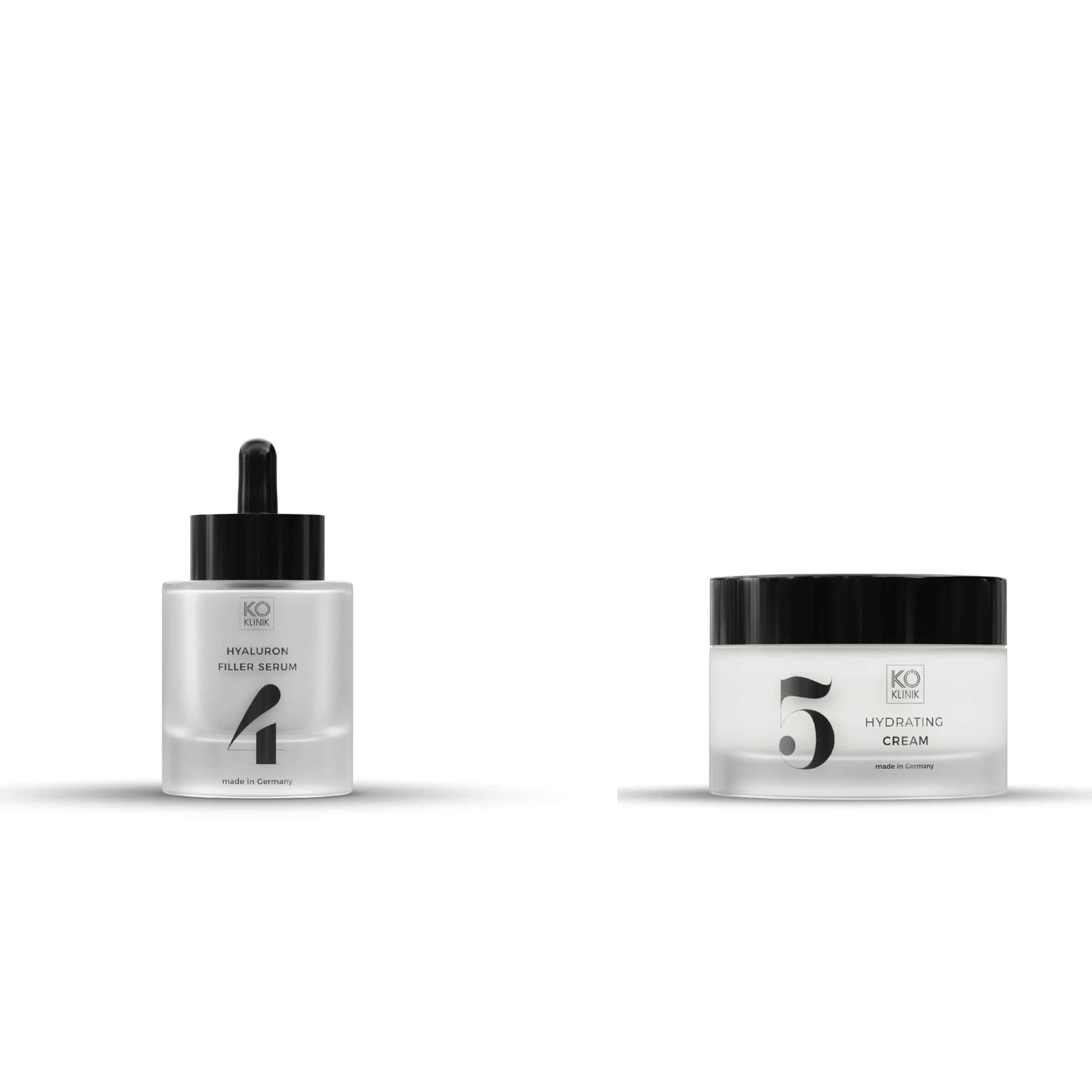
After gentle cleansing or a splash of water, you can apply a hydrating serum while the skin is still slightly damp. The active KÖ KLINIK Hyaluron Filler Serum can be integrated into a familiar routine as a lightweight source of hydration. A few drops are enough. However, hyaluronic acid does not replace a final moisturizing step: In dry air, follow with a suitable moisturizer.
4. Lock In Moisture with a Cream
A fragrance-free or well-tolerated moisturizer can help retain water in the outermost layer of the skin. Apply it thinly and evenly instead of continually adding new layers. Very dry skin may benefit from a richer texture on the cheeks and lips. If you are prone to blemishes, choose a lighter, non-comedogenic moisturizer.
5. Do Not Treat Sprays as Standalone Skincare
A fine hydrating mist can feel pleasant while traveling. Without follow-up care, however, the effect is often only temporary. What matters is not how often you spray, but whether your routine provides moisture overall and then helps retain it. The same principle applies here: fewer products, combined thoughtfully.
6. Remember UV Protection After Landing
If you land in the morning or during the day and will be outside afterward, apply broad-spectrum sunscreen with at least SPF 30. Allow your serum and moisturizer to absorb briefly, and avoid prolonged rubbing. If your sunscreen pills over your skincare, our guide “Does Sunscreen Pill? 7 Steps to Prevent Pilling” can help.
7. In the Evening: Gently Return to Your Normal Routine
At home, gentle cleansing with lukewarm water is enough. Pat your skin dry and apply your familiar skincare while it is still slightly damp. If your skin already feels tight, it is best to skip harsh exfoliants, multiple acids, or intensive deep cleansing that same night. The 3-Minute Rule After Showering can also be used after traveling.
What to Avoid on the Plane
- A completely new routine: Unfamiliar products make it harder to determine the cause of any reactions.
- Many layers of active ingredients: Retinoids, acids, and intensive exfoliants are rarely the best immediate solution for irritated skin.
- Very hot water: It can remove additional natural oils from the skin.
- Constantly reapplying moisturizer without a need: One well-balanced layer is usually more comfortable than many changing textures.
- Forgetting sunscreen: UV protection remains important even after returning from your trip.
FAQ About Skincare During Air Travel
Does flying make skin permanently dry?
Usually, the dry feeling is temporary. How strongly your skin reacts depends, among other things, on your skin type, the length of the flight, the climate, and your usual skincare routine. A simple routine and enough time to recover often help restore your skin’s familiar feel.
Should I wear a sheet mask during the flight?
It is not necessary. A familiar moisturizer is more discreet, simpler, and avoids adding another product with potential fragrances or preservatives. If you tolerate masks well, you can use one at home in a calm environment.
Can I wear makeup on the plane?
Yes. With dry skin, thin layers are usually more comfortable. Remove makeup gently after your trip and avoid vigorous rubbing. For a calmer-feeling complexion, the tolerance of the products you use is more important than a blanket ban on makeup.
When should dry skin be evaluated by a doctor?
If you develop a new or persistent skin reaction after traveling—especially severe redness, swelling, blisters, oozing areas, pain, or breathing difficulties—medical advice is recommended. Tell the treating professional where you traveled, how long you were away, and which new products or environments may have played a role.
Conclusion: Calm Skincare Instead of an In-Flight Overload
After a flight, dry skin mainly needs a clear sequence: familiar products, clean hands, gentle cleansing, hydration on slightly damp skin, a final moisturizer, and sunscreen during the day. This keeps your return journey from becoming a stress test for the skin barrier—and lets you resume your normal beauty routine with ease.